Monday, August 5, 2013

Benefits of Chiropractic Care


Chiropractic is regarded as one of the safest and most effective treatments for back and neck pain, but its benefits expand beyond those areas.  The spine acts as the body’s control panel, where the nervous system communicates with the rest of the body.  Imbalances and injury anywhere along the spine can cause health problems that affect other body parts or organs and disrupt the entire structure of the nervous system, resulting in loss of normal function, nerve damage, discomfort, and pain.

 The good news is if detected early, spinal imbalances (herniated discs, subluxations, pinched nerves, etc.) can be easily corrected via chiropractic adjustments.  Chiropractic treatments are effective because they restore the spine to its optimal state, therefore providing the conditions necessary for the body’s self-healing mechanism to kick in.  With regular adjustments, not only are spinal imbalances corrected and pain diminished, but patients are able to achieve the best overall health possible as long as the spine is in tip-top shape.

Regular spine maintenance can benefit not only those who experience pain, but also serve as a preventive measure for patients of all ages who are committed to taking care of their health.  Daily stressors such as work, commuting, family and personal life can have a negative impact on your health.  Pregnancy can cause physical and emotional stress as well.  By conditioning the spine through regular chiropractic adjustments, patients can prepare their bodies to live as healthily as possible and reduce the negative effect of stress in their lives.  As for expectant mothers, chiropractic care during pregnancy provides comfort and reduces back pain from the added weight and pressure of the growing baby, and studies show women who receive regular adjustments experience easier deliveries.

Chiropractic care is an excellent option for safe, effective, holistic pain relief, as well as a protective measure against a number of conditions, including:

Sciatica
Arthritis
Carpal tunnel syndrome
Migraines
Stress
Insomnia
And more…

Tuesday, July 9, 2013

Kinesio Taping for Physical Rehabilitation, Injury Prevention, and Athletic Endurance

Kinesio taping is an innovative technique that has been used in medical applications since its inception in the 1970s, particularly for the treatment of soft tissue trauma and sports injuries.

 Kinesio taping works by expertly applying a self-adhesive flexible fabric-like material to the skin, using patented techniques, which our doctors are certified in. Once applied, kinesio taping assists in correcting muscular misalignments, restoring normal muscular function, decreasing pain, increasing vascular and lymphatic flow, and protect against further injury.

 Rather than restricting muscle function as other taping and bandaging methods do, kinesio taping enhances the body’s natural muscle movements and aids in healing and reducing myofascial pain. Patients who practice sports and enjoy physical activity can greatly benefit from adding kinesio taping to their fitness routines for improved performance and increased endurance.

 Used by professional athletes as well as fitness enthusiasts around the world, kinesio taping is a powerful tool that protects muscles from possible injury and increases muscular energy and endurance, resulting in superior performance. Kinesio taping has been used by Olympic athletes (including swimmers, runners, gymnasts, and many others), professional sports players, and marathon runners and has been widely publicized due to its effectiveness.

 Kinesio taping is an excellent complement to our range of non-surgical physical rehabilitation services and helps patients improve healing and comfort. It is recommended as a supplement to enhance the benefits of physical therapy, massage therapy, soft tissue mobilization, and chiropractic and orthopedic care provided by our expert staff.

 Patients who are in need of a boost while they work to heal and regain strength after an injury, as well as sports enthusiasts, runners, and athletes looking to enhance their performance are encouraged to visit us to experience the benefits of kinesio taping in NYC.

Wednesday, May 8, 2013

Lumbar Herniated disc-Non surgical solutions

Lumbar herniated disc
Non surgical solutions in NYC
Call (212) 627-8149


above video shows how our patented non drug non-surgical methods help those with herniated discs

One of the conditions that we see every day in our NYC office is that of patients that have Sciatica due to a herniated disc.
What is Sciatica and what are the current medical treatments?

The Sciatic nerve is the biggest nerve in your body and about as thick as your finger.
The discs are located between each vertebra and provide flexibility and shock absorption for the spine. The thick, fibrous outer wall, known as the annulus fibrosus, surrounds a jell-like center, called the nucleus pulposus. Discs undergo tremendous amounts of stress, which can sometimes lead to a bulging disc, which is when the disc wall becomes weakened  enough to allow the disc to bulge out and press painfully on surrounding nerves. A herniated disc occurs when the pressure within a disc is so great that a tear occurs in the disc wall allowing a portion of the nucleus pulposus to protrude. The escaped nucleus pulposus may then impinge painfully on nerve roots, leading to numbness, tingling and or muscle weakness associated with the condition of Sciatic pain.

Currently most medical procedures involve medication and or injections- both of these include risks and do not address the underlying problem.
Most of the time a pain management doctor would want to do a epidural or a facet injection to quite the pain. This treatment does provide a temporary relieve of symptoms BUT the disc material will continue to protrude and irritate the nerve and eventually fail. 
In my experience patients that have had multiple injections still wind up in my office because the injections are a patch not a fix.
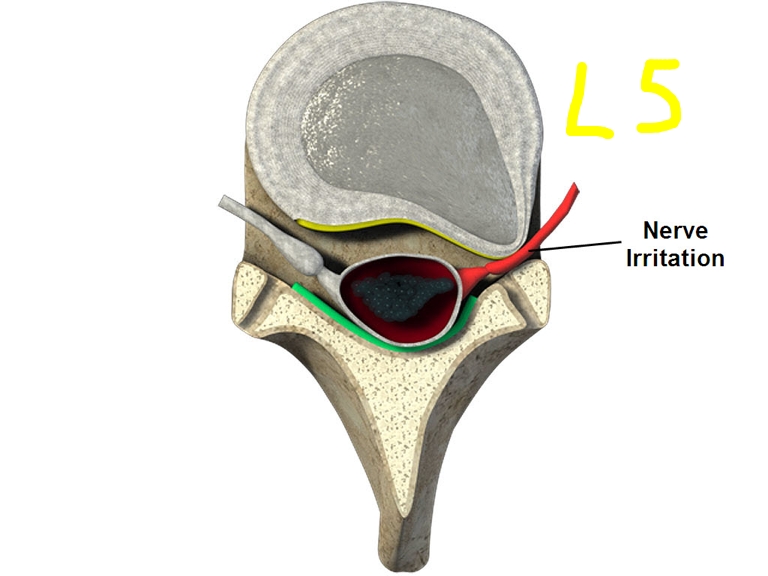
The most common disc to fail is the L5 disc which is the lowest lumbar disc.
Usually it effects the S1 nerve root.

The video below shows how the disc material can press on the very sensitive nerves and cause pain.
When the nerve is pressed it can cause severe leg pain and even complaints into the ankle and foot.


If you or a loved one is suffering with Sciatica in Manhattan contact me directly and we can discuss how our Non-drug,Non-surgical solution can help you get back to normal.
Yours in health-
Dr. Steven Shoshany

Monday, December 3, 2012

Before Spinal surgery consider this treatment.


Before spinal surgery for back pain and radiating leg pain consider spinal decompression.
Call (212)645-8151 for appointment in NYC

All to often we have patients that come into our office and it is their last stop before undergoing spinal surgery.
Many times these patients are at their wits end and are frustrated with the treatments they have received.
 Enter Spinal decompression.


This non-surgical treatment has been a fantastic treatment option for patients that have Sciatica due to a herniated disc.
The treatment itself is painless and patients often notice results within the first few visits.

Below  is a recent testimonial from a patient that came into our office after seeing a list of doctors with little results.
After reviewing his MRI and examining the patient we concluded he was an excellent candidate for spinal decompression. the combination of Chiropractic care, deep tissue massage, Physical therapy and Spinal decompression solved his problem.


After suffering from episodes of back pain intermittently over the past decade, I eventually developed chronic pain that just didn't go away. I went to a number of chiropractors,medical doctors and physical therapists with little relief. The only alternative left seemed to be surgery. That seemed drastic, so I did some research on my own for non-surgical alternatives. I came upon spinal decompression, which just made sense to me and was less invasive.


I found Dr. Shoshany, one of the few chiropractors in NYC with advanced decompression equipment. Dr. Shoshany answered my questions and concerns directly in a way that made me feel very comfortable. 
After a just few sessions I began to experience some relief, but to be honest, it wasn't always a straight line. He and his colleagues explained that since my injuries didn't occur in just a few weeks, my healing wasn't going to happen in just a few weeks either. That gave me the reassurance I needed to continue. I'm glad that I stuck with it. A few weeks after completing decompression, while continuing to get regular adjustments, physical therapy and massage, the pain started to subside noticeably, I continue to feel increasingly better. It's not something that happened instantly, and it did take commitment, but I'm extremely happy with my progress

He stressed a holistic approach which required a commitment, not only to decompression, but to chiropractic adjustments and physical therapy. It's worth noting that they have a great loft space in Soho NYC and that their physical and massage therapists are probably the best I've ever encountered. So that made it that much easier to commit.
 Michael.

What makes us different is that we combine all the non-surgical disciplines under one roof.
Chiropractic care, Pain management, Physical therapy, Spinal decompression.
If you are suffering with radiating arm or leg pain, Herniated disc, Sciatica visit www.drshoshany.com

Wednesday, September 26, 2012

Sciatica and right sided knee pain due to a L5 herniated disc


L5 right lateral disc herniation placing pressure on the nerve root


Sciatica and right sided knee pain due to a L5 herniated disc


-Resolved with Chiropractic care and spinal decompression.


We see success with patients that suffer with Sciatica and Low back pain everyday in my NYC practice but this particular case stood out because of how quickly the patient went from being reliant on Percocet, anti-inflammatory meds and muscle relaxers to being pain and drug free and returning to his normal activities.

Vincent presented to my office in early August with intense Sciatica down his left leg that causes him to limp terribly. He was very active and enjoyed playing tennis, golf and biking but this recent onset of pain just came on without any know injury. He was unable to lie in his stomach and described the pain as a shooting, burning and tingling pain down his right thigh into his right knee.

He went to his primary and diagnosed with a L5-S1 radiculopathy, given pain meds and was told to get a MRI and when the results came back that he had a herniated disc he was recommended to get a epidural injection in his spine. This went on for two weeks with little results, sleepless nights and days induced in a foggy blur.

Luckily for him he was able to research non-surgical herniated disc treatment and bumped into spinal decompression and found our NYC office.

When he came in we discovered through a Chiropractic exam that his pelvis was antalgic (shifted) and L5 was completely counter rotated. In reviewing the MRI it revealed that he had a right paracentral disc tear and foraminal disc protrusion, closely related to the exiting right L5 nerve root. We also had confirmation of findings by way of a NCV (nerve conduction velocity test) that the offending nerves where L4-L5 and L5-S1 nerve roots.

We immediately started with Cox flexion distraction and Spinal decompression on the DRX 9000. We also adjusted his lower lumbar spine using a gentle side posture adjustment.

Within five visits the patient was able to walk without a limp and the Sciatica was moving up and away.

We also utilized Kinesio taping for Sciatica and to stabilize the knee.

What had happened with the Sciatica is the L5 nerve root was being pinched and that muscle supplies the muscle of the lower leg- within a short period of time the muscle will atrophy (shrink).

By the 8th visit the patient is virtually pain free and on the road to recovery without pills or surgery.
In our practice we offer Chiropractic care along with Spinal decompressio, Physical therapy and Pain management

To learn more about my practice visit www.drshoshany.com
or to make an immediate appointment in NYC call (212)645-8151


Thursday, August 11, 2011

Herniated Discs and Spinal Decompression


As an NYC pain relief center, Living Well Medical and all of our therapists, chiropractors and doctors are intimately familiar with the causes of back and neck pain; some of us have even gone through that pain ourselves in addition to having treated it before. Among the most notorious of the conditions we treat is the herniated disc - it regularly takes our patients out of the flow of their lives and steals productivity, activity and general happiness. Having seen this so many times, it’s no surprise that Living Well Medical has become a place of expertise for the non-surgical treatment of this condition. Today, I wanted to talk a little bit about a particular technology we use to treatment disc herniations of the back and neck called spinal decompression and how it works. Hopefully, if a herniated disc is causing you pain, you will see that there are options to becoming pain free that don’t involve a surgical center.

As many of you likely know, a herniated disc is a problem that occurs when the inner portion of a spinal disc pushes outward into the spinal canal. It’s not uncommon for that protrusion to compress spinal nerves causing inflammation, pain and potential disability. What’s more, spinal injuries and problems of this sort typically take long periods of time to heal because many of the smaller structures of the spine like intervertebral discs are largely avascular and have little blood supply with which to obtain nutrients that can aid in repairs.

At our office, we use the DRX 9000 spinal decompression system. During treatment with the DRX 9000, a patient will lie down on a table and be specially harnessed to the device. A specific program is created to only target the discs that are herniated and causing pain. When the program is run, a precise stretch is applied to the spine, lengthening the spine and creating more space between the vertebrae. This takes pressure off of the disc; reduced load on the disc enables it to more easily bring in those desperately needed fluids and nutrients.

Spinal decompression seeks to lend support to the natural healing process, so it is completely non-invasive. Over a series of treatment sessions, the herniation can be made to return to its original position in the disc, relieving pain and restoring proper function. However, it’s important to note that spinal decompression is not for everyone and results will vary from person to person. People who have had spinal fusion surgery in the past are unfortunately not candidates for decompression with the DRX 9000.

For more information on pain treatment at Living Well Medical in NYC or on spinal decompression, give our office a call at 212-645-8151. We’re here to help when you need us.

- Dr. Shoshany, NYC Chiropractor

Monday, June 27, 2011

What Causes Sciatica?

In the world of back and neck pain, sciatica is perhaps one of the best known names. It’s like the superstar of back pain and neck pain. Well, more like the super villain. The point is, sciatica gets a lot of attention for good reason - it hurts like crazy and it’s unfortunately common. Back pain that leads to downtime may be experienced by as high an estimate as 80% of the population in America. Sciatica is involved in a rather high number of those cases.

So what the heck causes sciatica? What are the reasons we get it? It sounds like the same question but not quite. One is an anatomical explanation and the other leads us into specific conditions. That’s because sciatica isn’t really a disease or condition; sciatica is just a group of symptoms related to nerve impingement. And it’s in the nerves where we begin to find our explanation.

As you know, the spine is a huge conduit running the “wires” of our nervous system. It’s a delicate structure that the entire body depends on to function properly with tasks like collecting data, relaying signals and providing motion and function to our bodies. Sometimes, due to age, accident or some combination thereof, the nerves become squished as they exit the spine causing irritation, inflammation and ultimately, pain. Pain varies from person to person and based on severity of the nerve compression, but it’s pretty much part of the deal. Sciatica specifically indicates that the sciatic nerves in the spine (they exit the spinal canal in the lower back) are affected. The lower back and neck are generally more susceptible to injury of this kind because there is a much greater range of motion.

So what about conditions? Why do I get sciatica? There are, sadly, many reasons people feel the stinging, burning pains of sciatica. In addition, they can only be confirmed with MRI findings. Problems like herniated or bulging discs, spinal stenosis and piriformis syndrome are some of the more well known culprits. Spondylolisthesis or spinal tumors are less likely but also real contributors to lumbar pain.

The main thing I hope you take away from this is that if you have back pain, see a doctor right away. At Living Well Medical in NYC we specialize in treating pain without surgical intervention. Give us a call today if you need help at 212-645-8151.

- Dr. Shoshany, NYC Chiropractor

Tuesday, May 31, 2011

Common Causes of Neck Pain

You never know when you might have a new pain in the neck - you wake up from a nap or you move in a seemingly harmless way, and all of a sudden, you feel a twinge. Neck pain is, as implied by the expression, at least an annoyance if not an outright miserable experience. Especially as it relates to muscular issues (which account for a good number of neck pain cases), the pain can descend suddenly and stick around for an inordinate amount of time. This is particularly true if you don’t get the right kind of treatment. At Living Well Medical in NYC, we deal with neck injuries and pain of all types, so we’re familiar with most causes. Here we’ll be discussing a couple of them. Of course, if you have questions, we’re here to answer them.

Muscle injury/tension

Those of us who are very active or have jobs that require strenuous activity will perhaps be familiar with neck pain from a muscle injury. Repetitive motions can overtax muscle tissue causing pain and inflammation. With neck pain, it usually is indicated by difficulty with a certain range of motion.

Injuries of this type can typically be treated with manual therapies like physical therapy, Active Release Techniques, the Graston Technique, and/or chiropractic.

Herniated Spinal Discs

Neck pain because of a herniated disc is a much different affair than a muscle problem. Pain is of a different variety, shooting and burning, sometimes extending out into the arms and upper back. It tends to be much more severe, although that is a case by case thing.

In order to be sure you have a herniated disc, MRIs and nerve tests are necessary to confirm the diagnosis.

Spinal disc herniation often requires a more multidisciplinary approach to get the best results. One of the staples of treatment in our office is spinal decompression with the DRX9000, a cutting edge non-surgical technology specifically designed for the relief of pain related to herniated discs.

As a practice that focuses on pain relief, neck pain is one of the most common problems we see. If neck pain has been a problem for you and just won’t go away, give us a call. We have experience treating just about any kind of pain. Call us today at 212-645-8151 and come on in. We’re here to help.

- Dr. Shoshany, NYC Chiropractor

Tuesday, May 10, 2011

Getting Treated for a Herniated Disc

A herniated disc is a pain unlike anything else. To say it completely interrupts your life is a total understatement. To say it can be absolute misery is perhaps too bluntly saying it like it is. The main point is, for people suffering with a herniated disc, getting relief is nearly the only thing on their minds. At Living Well Medical in NYC, we’ve been helping people find lasting relief and even go back to being pain-free for years, and we do it without surgical intervention.

Herniated disc treatment programs at our New York office generally involves many different facets to improve overall wellness. Changes in nutrition and diet, physical therapy to improve muscle stability, chiropractic to adjust the spinal alignment, acupuncture to relief pain and stress, and a wealth of other soft tissue techniques like massage and Active Release can all constitute a full pain relief program at Living Well Medical. However, a major component that contributes to lasting benefits is spinal decompression therapy.

This therapeutic device is relatively new as a treatment for herniated, bulging or prolapsed discs, but the results it has achieved have pushed it to right near the top of the non-surgical back pain treatment list.

By applying closely monitored and computer-regulated amounts of stretch to the spine in the areas of herniation/bulge, pressure on the injured discs can be relieved, allowing them to pull badly needed nutrients and fluids into themselves. In so doing, damaged disc structures may be repaired and pain relieved. The device allows patients to lie down and relax during treatment; many even fall asleep during a typical treatment session.

The advancements in non-surgical pain relief like spinal decompression therapy have enabled us to help people in numbers we were not able to before. If a herniated disc is at the core of your pain, contact our office @ 212-645-8151 and ask about spinal decompression. We want to help you stop the pain.

- Dr. Shoshany, NYC Chiropractor

Thursday, April 28, 2011

Does Spinal Decompression Work?


We were one of the first chiropractic and pain management centers in New York City to employ the DRX9000 technology to help patients suffering from back pain. From personal experience its become very clear that using the DRX 9000 to treat people with herniated or bulging discs has a great and clear effect on a patient's life.

Yes. Spinal Decompression works.

Spinal decompression, unlike surgery is non invasive and does not require the use of foreign materials of fragments of your own bone to treat painful conditions of the spine. It requires no drugs or injections, and does not have harmful side effects. The reason spinal decompression may be hard to find is because it is a very specialized piece of equipment. It treats back and neck pain, and it does it well. Most patients who are suffering from back pain and/ or sciatica and other forms of pain stemming from problems with intervertebral discs are never made aware of this amazing, non surgical option.

From my own personal experience it has become clear that it definitely helps alleviate painful symptoms and improve quality of life. Our patients who have received spinal decompression have demonstrated great results and sometimes the relief is even imminent.

Is anyone a candidate for spinal decompression?

Not everyone is a candidate for spinal decompression. Those that are very obese, have certain metal implants form surgery and other health issues and conditions, and people that have undergone spinal fusion surgery, along with a few other conditions, are not suitable candidates for spinal decompression. You cant know for sure until you schedule a consultation and get evaluated by a doctor. This can actually be done for free since we have been offering free consultations to people who are looking for surgical alternatives.

Specifically I recall one patient that had undergone chiropractic and physical therapy treatment with us for a long time. Due to time, wear and tear and age this particular patient was not improving much. Most people that get chiropractic adjustments feel better almost immediately and we combine our chiropractic adjustments with physical therapy, massage, the Graston Technique, and Cold Laser Therapy among other treatment protocols to help almost any painful condition. However due to their age and the amount of time and the intensity of the symptoms, they were evaluated for spinal decompression. It was a huge step in the right direction, not only did the painful symptoms decrease, but after continued treatment there was a very noticeable remission of pain, numbness and loss of sensation.

There aren't any long term studies done of spinal decompression, but the short term results have been very promising. We have done case studies ourselves on patients that were taking some very strong prescription medication with many side effects that interfered with their daily lives greatly. The results were overwhelmingly positive, and they were able to get off prescription drugs and get back to living their lives.

Tuesday, April 19, 2011

Sciatica and leg pain

It’s extremely common, extremely painful and extremely frustrating. It’s sciatica, one of the most
common problems contributing to people missing work in the US. Contrary to popular usage
in everyday speech, it’s not a condition. Rather, it’s a grouping of symptoms which include
everything that stinks about back troubles.

Here’s a short list of sciatica’s greatest hits (tongue firmly planted in cheek):

Lower Back Pain
Leg Pain
Burning Sensation
Numbness/Tingling
Muscular Weakness

So you read that list and think, I have some one or more of these symptoms and it’s the worst
- you might be a sciatica sufferer. One of the tricks that back pain causing conditions pull,
is to have very similar results. As a form of radiculopathy (when related to herniated discs
compressing the sciatic nerve, the namesake of sciatica), these types of symptoms are often
associated, although the direct cause may differ. That’s why spinal decompression practitioners
and other pain specialists typically require MRIs to determine the root cause of pain.

In many cases, disc irregularities like herniation or degeneration cause the nerve compression
that leads to irritation, inflammation and pain. Spinal decompression is one of our mainline
treatments for conditions like these, but Living Well Medical in NYC is multidisciplinary facility;
physical therapy, acupuncture, massage, chiropractic, Active Release Technique and so many
other techniques are available under one roof. Based on what we find, we create a unique
treatment program that is built around what’s wrong with you - none of these cookie cutter
programs you find in other pain clinics.

Sciatica is a major problem - it puts your life on hold completely. I talk to patients who can’t
stand, can’t sit, can’t even lie down to sleep properly because the pain is always there. The
most important thing is to see a doctor if the pain doesn’t go away in short order. Call us at 212-
645-8151.

Thursday, April 14, 2011

I Hurt Myself While Carrying My Laptop

We sometimes see patients come in who haven't had a slip or fall or an accident or have any sudden trauma occur, but instead they complain about pain resulting from every day activities, like running to catch the train, or just carrying your laptop around in a messenger bag.

Up until a few years ago, messenger bags weren't very popular, backpacks with shoulder straps were really the only method of carrying your stuff. As messenger bags became more popular, and more accepted in the workplace, partly due to their ability to not look awkward and out of place with a business suit, we started seeing more patients with neck and shoulder, and hip pain from carrying awkwardly secured loads.

Recently a patient complained of neck pain, while he was running late, with his heavy laptop and a few other items loaded in to his messenger bag. There was no accident, no fall, so sudden impact, just running around Manhattan like most of us do on a daily basis.

Messenger bags are fairly hard to secure firmly against the body, and will pretty much always move around and they require constant adjusting, and most people have a preferred side to carry the load on. Not to rail against messenger bags, but they can be a cause for some serious long term chronic, painful conditions. That said there are some helpful ways that we can modify the behavior of the owner of the bag to reduce the incidence of pain and injury.

What does the bag do to cause pain/ injury?

Well, the messenger bag only has one strap and must carry the load to one side while pulling across the body, this causes the opposite oblique and abdominal muscles to contract much harder and more often than is the load was centered on the body.

The Leg to the side of the bag, must work harder, and required much more hip flexor activity to lift the leg while walking, fighting the load of the bag.

The quadriceps and glute muscle to the side of the bag must work harder when going up stairs and bear more impact when going down stairs.

Bearing the load across the body also causes the opposite trapezius muscle to contract for long periods of time, and also recruits the sternocleidomastoid to the same side and causes them to contract in unison to fight the load.

The load often causes the owner of the bag to "lead with their head", leaning the head forward and out, and may lead to developing Forward Head Posture (FHP).

These misalignments in the body can lead to neck pain, back pain, and over time, lead to postural distortions that can develop in to chronic, painful conditions.

How do I avoid Potential Pain?

Switch it up: Switch between the messenger bag and a backpack, and make sure each is carried sung, and securely

Tighten: Make sure the items inside the bag fit securely, that they don't move around too much, tighten straps, and cords to keep things from moving around too much.

Posture: Pay attention to when you are leaning, or moving in a way you naturally wouldnt, and switch sides, switch between carrying the bad over either shoulder equally.

Train: Make sure you are training your body so that your "core" isnt used to handling awkward loads.

Get Help!

We usually treat neck pain and back pain stemming from carrying awkward loads with a combination of Physical Therapy, Behavior Modification, Chiropractic adjustments, and we also use techniques like Graston Technique, and Gaitscan Analysis to address the surrounding musculature and find other problems with the body that may be contributing to the pain/ injury.

Monday, March 14, 2011

Did I Pinch a Nerve?

It might start with just a movement that was a little too quick or a funny position that just didn’t feel right. Maybe you picked up a moving box and felt ‘something pop.’ Before you know it, your in so much pain that you can barely do anything without feeling it. I see people like this all the time at Living Well Medical in SoHo. It doesn’t take much, especially once you get into your late 50’s and higher. Your back gets a little more delicate because the spinal discs don’t work quite like they used to. It’s natural.

So inevitably your mind goes to the worst case scenario: did I pinch a nerve? It’s a scary question.

Everyone knows someone that has had severe back pain. Back pain is one of the most (if not the most) common debilitating conditions in the US. Pinched nerves because of a problem with spinal discs is only one of a host of conditions that lead to serious back pain, but for the purposes of the this blog, we’ll only focus on that (since I deal with them pretty regularly). It takes an MRI to really know if that’s the case, and after you’ve had one you can get cleared for treatment.

Conventional medical clinics will often propose surgical intervention, but no one wants that. If you can avoid the surgical knife and get relief, why the heck not? What’s more, surgery outcomes too often fall short of the hopes of the patients, occasionally having no effect at all (or even worsening things).

Here at Living Well we have a wide variety of non-surgical treatments that we use to get people back in control of their lives and their pain. That might include any number of methods like spinal decompression therapy, Active Release Technique, physical therapy, massage, acupuncture, or chiropractic adjustment, - the list goes on - but the specifics of your case and problem will dictate what is chosen.

The main thing is, if your think you have a pinched nerve, go to a doctor! Pain like that doesn’t normally just “go away” on its own; you need a little backup. If you are hurting, give us a call today at 212-645-8151.

Be well!

- Dr. Shoshany, NYC Chiropractor

Tuesday, March 8, 2011

C5, C6 Herniated Cervical Disc Herniation

Waking up not being able to move your neck seems like a serious issue, most people would definitely freak out a little, running their options through their mind, imagining the worst possible scenarios. Thoughts of the long waiting times in the emergency rooms, the constant pain, the impact on quality of life, and the thought of going under the knife would leave most people feeling defeated.

However giving up and not doing some serious research and seeking out second opinions when it comes to your health options can be a pretty big oversight, because there aren't many more important things in life than health.

Chiropractic adjustments remove interference with the nervous system, allowing the body to heal itself, these interferences can range from tight muscles, muscular imbalances, postural distortions, to herniated or bulging discs. Chiropractic is also the overwhelming alternative to surgery in The U.S.

Here is a Patient Testimonial from Living Well Medical.

Monday, March 7, 2011

What is Sciatica

New York City residents are very likely to suffer from back problems, which can often mean suffering from leg pain or numbness in the form of Sciatica.

Sciatica isn't a condition itself but it is the symptoms of a spinal nerve being impinged, irritated, or otherwise agitated from a bulging, herniated or ruptured spinal disc. Here is a short video about Sciatica, using the "Superspine" spinal model.


Tuesday, February 22, 2011

What Causes Leg Pain?

As New Yorkers, we are always on the move. Time is money; you’ve got to move fast in this town to succeed. That’s one reason that chronic or severe leg pain is a big problem. More than anything, it’s the pain that’s the problem of course, but the consequences to everyday life are quite noticeable too. So what the heck causes leg pain? How is it capable of so acutely affecting our lives? To the second question, there is probably no satisfactory answer aside from the obvious one (being in constant pain is miserable), but the first is much more quantifiable.

Leg pain is a very general term and doesn’t tell us a lot about the underlying causes, but as far as patients we often see at Living Well Medical here in NYC are concerned, they generally belong to two categories: neurological and musculoskeletal.

Neurological of course means that it involves the nervous system. The legs and lower body is innervated by the sciatic nerve roots that exit the spine in lumbosacral region (lower back and pelvic area). Sometimes, other structures like muscles, fascia or support structures like spinal discs can impinge upon these important nerves. The result can be pain (in the legs, lower back, buttocks, etc.), numbness, tingling, muscle weakness and worse in extreme cases. The most common symptoms are generally associated with sciatica, a group of symptoms related to a pinched sciatic nerve. So essentially, a pinched nerve from something like a bulging or herniated disc might be at the heart of the pain. Spinal decompression, chiropractic adjustment with the Cox flexion technique and even traditional pain management are commonly part of a Living Well Medical complete pain relief programs for leg pain of this type.

Musculoskeletal pain is another common culprit in leg pain, particularly sports-related injuries. If you have ever pulled a hamstring or strained a calf, you know what it feels like. Shin splints, Achilles tendonitis, runner’s knee - there is a world of injuries that come with physical activity. Your legs probably hurt because you have overexerted yourself in some way with these types of injuries. Whether related to repeated stresses on a muscle group or heavy weight bearing activity, your body has a threshold past which you shouldn’t force it. We regularly treat patients like these with non-invasive treatments like Active Release Technique and massage therapy, but the particulars of the case will always determine the course of treatment; there isn’t really a cookie-cutter way to relieve pain. At least, not if you want lasting relief.

So those are the basics of leg pain. It should be noted that this in no way covers everything. It’s mainly meant to show some of our more common leg pain causes. If you have leg pain, we’re here. Call Living Well Medical in SoHo New York and make an appointment - 212-645-8151.

- Dr. Shoshany, NYC Chiropractor

Chiropractic treatment for Lower Back Pain

As the findings of a recent Cochrane study recently confirmed, Chiropractic care for Lower back pain is as safe and effective as traditional medical care, but what may set it apart is its non invasive method, and its track record of safety. Over the past decade there have been about 106,000 deaths per year due to the negative effects of drugs, and drug treatment. NSAID medications alone, produce 10,000-20,000 fatalities from adverse effects on multiple organs, in the United States alone. Chiropractic is the leading choice for alternative pain treatment in the United States, that doesn't involved drugs or medication.

Combining Treatments
Chiropractic treatment is a great method alone, but when combined with other treatment methods, such as the Graston Technique, Cold Laser Therapy, and rehabilitative Physical Therapy, the effects of Chiropractic manipulation can be combined with these advanced treatment methods to create a individualized approach to speeding up the body's natural healing process.

Graston Technique
The Graston Technique is a soft tissue modality that employs several specially designed metal instruments that help treat the build up of scar tissue and other muscular adhesions that may be causing pain, obstructing drainage, resulting in slower healing times, and dysfunction in the body's proper movement patterns.

Cold Laser Therapy
Using a low class laser a beam is focused on to the site of pain, or inflammation for several seconds to minutes depending on the size of the area being treated and the dose provided by the cold laser therapy unit. Low level Laser Therapy may help stimulate the body's healing response and speed up the healing process.

Physical Therapy
Physical Therapy helps the patient return to normal activity through post injury or treatment, by rehabilitating the injured muscles, joints, ligaments, and tendons. It also helps find underlying structural and muscular weaknesses, then using strength and flexibility exercises addresses the weakness or imbalances.


A combined approach to helping clear the obstructions in the body's natural drainage and healing systems, allows for a reduction in pain, faster heeling, a correction of underlying physiological causes, a reduction in the need for pain medication, and can also help strengthen underlying structural and muscular faults which may lead to dysfunction in the first place.

Sunday, January 9, 2011

Questions on lower back pain.


I often get questions emailed to from people all over the world concerned about their back pain. These people are looking for alternatives to surgery:
When I have permission I post questions and answers:

The first person is from Egypt

Question on lower back pain

Question: I am very worried about the MRI result i recently received and would like an insight on what courses of treatment may be available for this condition. I would also like to know how serious this condition is. The accident referred to in the findings took place more than 10 years ago.

Thanks,


Findings:
- Status post motor car accident, the current study reveals:
- L4-L5 and L5-S1 discs are degenerated and show diffuse bulges
with associated small posterior central component at L5-S1 level
indenting the ventral thecal sac and attenuate the inlets of both
neural foramina at both levels, being slightly more on the left at
L5-S1.
- Buckling of ligamenta flava at L4-L5 level which augments the
discogenic canal stenosis.
- Rest of imaged discs are unremarkable.
- Intact vertebral bodies and neural arches with normal MR signal
intensity of their bone marrow.
- Noligamentum flavum hypertrophy.
- No facet joint arthropathy.
- Noprimary spinal canal stenosis.
- Normal MRI structural appearance and signal intensity of the
conus medullaris.
- Normal MRI appearance of retro and para spinal soft tissue
structures.
OPINION:-
L4-L5 and L5-S1 degenerative disc lesions with neural effects
described above.


This is just one piece of picture, Do you have pain or dysfunction?
Are you able to function without pain? The MRI report does indicate that your lower lumbar spine has degenerative changes and the disc has bulges.
When a patient presents with similar findings in our office. NYC Herniated disc Center. we conduct a thorough exam and run diagnostics to understand the extent of the degeneration, dysfunction and/or disability. We utilize a Non-surgical treatment called Spinal Decompression in conjunction with Physical therapy and Chiropractic care . We also find that the more chronic the condition the more emphasis needs to be placed on soft tissue techniques like the Graston technique or Active Release technique(ART). Chronic soft tissue problems respond well to these therapies and have great benefit in restoring normal pain free function.
What treatments have you tried?
Treatment like Chiropractic and traditional Physical therapy should help you with your alignment and core strength.Good luck with your lower back pain treatment and if you have any more questions please email me.

Spinal Decompression Subject: L5/S1 disc protrusion Question: My MRI report reads: Degenerative lateral canal stenosis and medium size posterocentral protrusion at L5/S1.
I have seen an orthopaedic surgeon who recommended surgery as the only option and that too, by having screws fitted in.

I read about spinal decompression which is unfortunately unavailable in my country. Is my condition a permanent deformation that I need to live with or is it a condition that can be healed. I read that through spinal decompression, the bulged disc repairs itself by taking it's original place.

Just because you have a herniated disc or in your case a disc protrusion doesn't mean you need to rush out and get a surgery.Be sure to get at least two more opinions.
There is a time and place for back surgery but when it comes to a herniated disc be sure to exhaust all non-surgical methods first.Chiropractic care,Physical therapy, and if you can handle Pilates, Yoga and spinal strengthening exercises are all great options.
But to answer your question about spinal decompression,it is a excellent treatment for herniated disc and it does help heal the disc.
I have seen hundreds of patients that have been told they need surgery get better with spinal decompression treatment. These people that undergo this treatment not only get symptom relief but when we order a second MRI 2-3 months after the last visit we see a increase in their disc height and reduction of the herniation.

- Dr. Shoshany is a recognised expert in the field of spinal rehabilitation and pain management. He has been a featured guest on the "Today Show", and his articles on spinal rehabilitation and pain management have been published widely.
- Living Well Medical is a state of the art pain management and treatment center, pioneering an integrated approach to healing, and pain relief. It is located in the SOHO/ Tribeca area in the heart of New York City at 632 Broadway.

Wednesday, December 8, 2010

Pinched Nerve in the Neck - What to do?


A stiff neck from sleeping funny or bad posture can be a bit of a pain, but for some people with neck problems, it takes on a whole new dimension. A pinched nerve in the neck can be exceedingly painful, so much so that sufferers are often forced to essentially take a break from their lives to recover and get relief from the pain. Here I hope to present a sort of “guide” for someone that believes they have a pinched nerve. But remember, if you are in severe pain, the best route to take is to see an NYC doctor about the problem right away.

Are there any surefire signs of a pinched nerve in the neck?

There is no “absolute” in terms of a pinched nerve in the neck, also called radiculopathy. However, there are some tell-tale signs that may indicate nerve impingement in the cervical vertebrae. That being said, only the proper medical tests like nerve conduction tests and EMG can tell if nerve impulses are indeed being interrupted. They include:

  • Headaches in back of head

  • Upper shoulder pain

  • Burning pain

  • Tingling, pins & needles in middle, ringer or little finger


What exactly is going on in a pinched nerve?

Although the physical mechanism can vary from place to place, the common thread in all types of radiculopathy is a nerve that is functioning improperly. It may be due to a herniated disc or scar tissue or a muscular problem, but in each case, a nerve is impinged by surrounding tissue and becomes inflamed, affecting its performance and often causing pain/disability.

What are the treatments for a pinched nerve?

At Living Well Medical in NYC, we have several different therapies available on-site that can help reduce inflammation, pain and swelling. In cases caused by a herniated disc, cervical spinal decompression is one of the more cutting edge treatments we use. It’s a next generation technology that can pinpoint individual spinal discs and may be able to stop the pain completely.

For other causes that are myofascial (related to muscles or the fascia), manual therapies like Active Release Technique, physical therapy and traditional gentle chiropractic methods might be more effective in treating the pinched nerve.

I’m pretty sure I have a nerve problem. What should I do?

The main point is to seek help and get the tests done to find out for sure. X-rays, EMGs and nerve tests can be done by our pain management doctors, and we have a vast referral network if you should need an MRI. But don’t wait. If you would like to speak to one of our experts, call Living Well Medical in NYC’s SoHo/NoHo area at (212) 645-8151.

- Dr. Shoshany, NYC Chiropractor

Thursday, November 11, 2010

New York Spinal Decompression


For several years, Living Well Medical in NYC has been helping patients with back and neck pain using spinal decompression therapy.

As a non-surgical treatment for patients with nerve compression in the spine resulting from injuries like herniated discs, bulging discs, spinal stenosis, degenerative disc disease and facet syndrome.

For spinal issues in the lower back like these, we chose the DRX 9000, an extremely effective decompression system that focuses on ailments of the lumbar spine. Because of the increasingly sedentary lifestyle in the modern world, lower back problems are becoming more common. The DRX 9000 was created to treat the lower back without the need for surgery.

That being said, spinal decompression is not the be-all and end-all for back pain treatment. It can take more than 20 treatments for some people to start seeing relief, and truly effective treatment should also involve postural training and strength exercises to provide greater overall stability. This can help prevent re-injury.

A single decompression session can take up to an hour, including time to be put into the harness and hook a patient up to the machine. The actual treatment often takes only a half hour. In the supine position, patients can relax and many doze off during a session.

One of major distinguishing features of Living Well Medical in NYC is that we have integrated other therapies into a complete spinal re-education program. Techniques like Active Release Technique, gentle chiropractic, cold laser therapy and physical therapy can help improve outcomes and regularly become a part of a custom treatment program.

The results are perhaps the thing we are most proud of about our spinal decompression protocols. Many patients who have found no relief with other methods and have come to us as a last resort only to find that spinal decompression was just what they were looking for all along. Everyone is different, but it offers a ray of hope for those who have not responded to other methods.

Want to know if you are a candidate for spinal decompression at Living Well Medical in NYC? Give us a call today at (212) 645-8151 and schedule your consultation today. We are waiting to help you.

- Dr. Shoshany, NYC Chiropractor