Thursday, August 11, 2011

Herniated Discs and Spinal Decompression


As an NYC pain relief center, Living Well Medical and all of our therapists, chiropractors and doctors are intimately familiar with the causes of back and neck pain; some of us have even gone through that pain ourselves in addition to having treated it before. Among the most notorious of the conditions we treat is the herniated disc - it regularly takes our patients out of the flow of their lives and steals productivity, activity and general happiness. Having seen this so many times, it’s no surprise that Living Well Medical has become a place of expertise for the non-surgical treatment of this condition. Today, I wanted to talk a little bit about a particular technology we use to treatment disc herniations of the back and neck called spinal decompression and how it works. Hopefully, if a herniated disc is causing you pain, you will see that there are options to becoming pain free that don’t involve a surgical center.

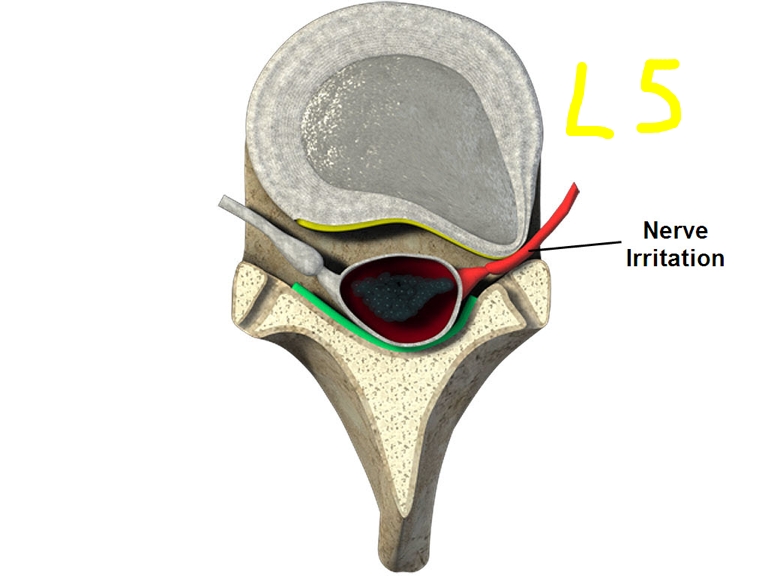
As many of you likely know, a herniated disc is a problem that occurs when the inner portion of a spinal disc pushes outward into the spinal canal. It’s not uncommon for that protrusion to compress spinal nerves causing inflammation, pain and potential disability. What’s more, spinal injuries and problems of this sort typically take long periods of time to heal because many of the smaller structures of the spine like intervertebral discs are largely avascular and have little blood supply with which to obtain nutrients that can aid in repairs.

At our office, we use the DRX 9000 spinal decompression system. During treatment with the DRX 9000, a patient will lie down on a table and be specially harnessed to the device. A specific program is created to only target the discs that are herniated and causing pain. When the program is run, a precise stretch is applied to the spine, lengthening the spine and creating more space between the vertebrae. This takes pressure off of the disc; reduced load on the disc enables it to more easily bring in those desperately needed fluids and nutrients.

Spinal decompression seeks to lend support to the natural healing process, so it is completely non-invasive. Over a series of treatment sessions, the herniation can be made to return to its original position in the disc, relieving pain and restoring proper function. However, it’s important to note that spinal decompression is not for everyone and results will vary from person to person. People who have had spinal fusion surgery in the past are unfortunately not candidates for decompression with the DRX 9000.

For more information on pain treatment at Living Well Medical in NYC or on spinal decompression, give our office a call at 212-645-8151. We’re here to help when you need us.

- Dr. Shoshany, NYC Chiropractor

Monday, June 27, 2011

What Causes Sciatica?

In the world of back and neck pain, sciatica is perhaps one of the best known names. It’s like the superstar of back pain and neck pain. Well, more like the super villain. The point is, sciatica gets a lot of attention for good reason - it hurts like crazy and it’s unfortunately common. Back pain that leads to downtime may be experienced by as high an estimate as 80% of the population in America. Sciatica is involved in a rather high number of those cases.

So what the heck causes sciatica? What are the reasons we get it? It sounds like the same question but not quite. One is an anatomical explanation and the other leads us into specific conditions. That’s because sciatica isn’t really a disease or condition; sciatica is just a group of symptoms related to nerve impingement. And it’s in the nerves where we begin to find our explanation.

As you know, the spine is a huge conduit running the “wires” of our nervous system. It’s a delicate structure that the entire body depends on to function properly with tasks like collecting data, relaying signals and providing motion and function to our bodies. Sometimes, due to age, accident or some combination thereof, the nerves become squished as they exit the spine causing irritation, inflammation and ultimately, pain. Pain varies from person to person and based on severity of the nerve compression, but it’s pretty much part of the deal. Sciatica specifically indicates that the sciatic nerves in the spine (they exit the spinal canal in the lower back) are affected. The lower back and neck are generally more susceptible to injury of this kind because there is a much greater range of motion.

So what about conditions? Why do I get sciatica? There are, sadly, many reasons people feel the stinging, burning pains of sciatica. In addition, they can only be confirmed with MRI findings. Problems like herniated or bulging discs, spinal stenosis and piriformis syndrome are some of the more well known culprits. Spondylolisthesis or spinal tumors are less likely but also real contributors to lumbar pain.

The main thing I hope you take away from this is that if you have back pain, see a doctor right away. At Living Well Medical in NYC we specialize in treating pain without surgical intervention. Give us a call today if you need help at 212-645-8151.

- Dr. Shoshany, NYC Chiropractor

Tuesday, May 31, 2011

Common Causes of Neck Pain

You never know when you might have a new pain in the neck - you wake up from a nap or you move in a seemingly harmless way, and all of a sudden, you feel a twinge. Neck pain is, as implied by the expression, at least an annoyance if not an outright miserable experience. Especially as it relates to muscular issues (which account for a good number of neck pain cases), the pain can descend suddenly and stick around for an inordinate amount of time. This is particularly true if you don’t get the right kind of treatment. At Living Well Medical in NYC, we deal with neck injuries and pain of all types, so we’re familiar with most causes. Here we’ll be discussing a couple of them. Of course, if you have questions, we’re here to answer them.

Muscle injury/tension

Those of us who are very active or have jobs that require strenuous activity will perhaps be familiar with neck pain from a muscle injury. Repetitive motions can overtax muscle tissue causing pain and inflammation. With neck pain, it usually is indicated by difficulty with a certain range of motion.

Injuries of this type can typically be treated with manual therapies like physical therapy, Active Release Techniques, the Graston Technique, and/or chiropractic.

Herniated Spinal Discs

Neck pain because of a herniated disc is a much different affair than a muscle problem. Pain is of a different variety, shooting and burning, sometimes extending out into the arms and upper back. It tends to be much more severe, although that is a case by case thing.

In order to be sure you have a herniated disc, MRIs and nerve tests are necessary to confirm the diagnosis.

Spinal disc herniation often requires a more multidisciplinary approach to get the best results. One of the staples of treatment in our office is spinal decompression with the DRX9000, a cutting edge non-surgical technology specifically designed for the relief of pain related to herniated discs.

As a practice that focuses on pain relief, neck pain is one of the most common problems we see. If neck pain has been a problem for you and just won’t go away, give us a call. We have experience treating just about any kind of pain. Call us today at 212-645-8151 and come on in. We’re here to help.

- Dr. Shoshany, NYC Chiropractor

Tuesday, May 10, 2011

Getting Treated for a Herniated Disc

A herniated disc is a pain unlike anything else. To say it completely interrupts your life is a total understatement. To say it can be absolute misery is perhaps too bluntly saying it like it is. The main point is, for people suffering with a herniated disc, getting relief is nearly the only thing on their minds. At Living Well Medical in NYC, we’ve been helping people find lasting relief and even go back to being pain-free for years, and we do it without surgical intervention.

Herniated disc treatment programs at our New York office generally involves many different facets to improve overall wellness. Changes in nutrition and diet, physical therapy to improve muscle stability, chiropractic to adjust the spinal alignment, acupuncture to relief pain and stress, and a wealth of other soft tissue techniques like massage and Active Release can all constitute a full pain relief program at Living Well Medical. However, a major component that contributes to lasting benefits is spinal decompression therapy.

This therapeutic device is relatively new as a treatment for herniated, bulging or prolapsed discs, but the results it has achieved have pushed it to right near the top of the non-surgical back pain treatment list.

By applying closely monitored and computer-regulated amounts of stretch to the spine in the areas of herniation/bulge, pressure on the injured discs can be relieved, allowing them to pull badly needed nutrients and fluids into themselves. In so doing, damaged disc structures may be repaired and pain relieved. The device allows patients to lie down and relax during treatment; many even fall asleep during a typical treatment session.

The advancements in non-surgical pain relief like spinal decompression therapy have enabled us to help people in numbers we were not able to before. If a herniated disc is at the core of your pain, contact our office @ 212-645-8151 and ask about spinal decompression. We want to help you stop the pain.

- Dr. Shoshany, NYC Chiropractor

Thursday, April 28, 2011

Does Spinal Decompression Work?


We were one of the first chiropractic and pain management centers in New York City to employ the DRX9000 technology to help patients suffering from back pain. From personal experience its become very clear that using the DRX 9000 to treat people with herniated or bulging discs has a great and clear effect on a patient's life.

Yes. Spinal Decompression works.

Spinal decompression, unlike surgery is non invasive and does not require the use of foreign materials of fragments of your own bone to treat painful conditions of the spine. It requires no drugs or injections, and does not have harmful side effects. The reason spinal decompression may be hard to find is because it is a very specialized piece of equipment. It treats back and neck pain, and it does it well. Most patients who are suffering from back pain and/ or sciatica and other forms of pain stemming from problems with intervertebral discs are never made aware of this amazing, non surgical option.

From my own personal experience it has become clear that it definitely helps alleviate painful symptoms and improve quality of life. Our patients who have received spinal decompression have demonstrated great results and sometimes the relief is even imminent.

Is anyone a candidate for spinal decompression?

Not everyone is a candidate for spinal decompression. Those that are very obese, have certain metal implants form surgery and other health issues and conditions, and people that have undergone spinal fusion surgery, along with a few other conditions, are not suitable candidates for spinal decompression. You cant know for sure until you schedule a consultation and get evaluated by a doctor. This can actually be done for free since we have been offering free consultations to people who are looking for surgical alternatives.

Specifically I recall one patient that had undergone chiropractic and physical therapy treatment with us for a long time. Due to time, wear and tear and age this particular patient was not improving much. Most people that get chiropractic adjustments feel better almost immediately and we combine our chiropractic adjustments with physical therapy, massage, the Graston Technique, and Cold Laser Therapy among other treatment protocols to help almost any painful condition. However due to their age and the amount of time and the intensity of the symptoms, they were evaluated for spinal decompression. It was a huge step in the right direction, not only did the painful symptoms decrease, but after continued treatment there was a very noticeable remission of pain, numbness and loss of sensation.

There aren't any long term studies done of spinal decompression, but the short term results have been very promising. We have done case studies ourselves on patients that were taking some very strong prescription medication with many side effects that interfered with their daily lives greatly. The results were overwhelmingly positive, and they were able to get off prescription drugs and get back to living their lives.

Tuesday, April 19, 2011

Sciatica and leg pain

It’s extremely common, extremely painful and extremely frustrating. It’s sciatica, one of the most
common problems contributing to people missing work in the US. Contrary to popular usage
in everyday speech, it’s not a condition. Rather, it’s a grouping of symptoms which include
everything that stinks about back troubles.

Here’s a short list of sciatica’s greatest hits (tongue firmly planted in cheek):

Lower Back Pain
Leg Pain
Burning Sensation
Numbness/Tingling
Muscular Weakness

So you read that list and think, I have some one or more of these symptoms and it’s the worst
- you might be a sciatica sufferer. One of the tricks that back pain causing conditions pull,
is to have very similar results. As a form of radiculopathy (when related to herniated discs
compressing the sciatic nerve, the namesake of sciatica), these types of symptoms are often
associated, although the direct cause may differ. That’s why spinal decompression practitioners
and other pain specialists typically require MRIs to determine the root cause of pain.

In many cases, disc irregularities like herniation or degeneration cause the nerve compression
that leads to irritation, inflammation and pain. Spinal decompression is one of our mainline
treatments for conditions like these, but Living Well Medical in NYC is multidisciplinary facility;
physical therapy, acupuncture, massage, chiropractic, Active Release Technique and so many
other techniques are available under one roof. Based on what we find, we create a unique
treatment program that is built around what’s wrong with you - none of these cookie cutter
programs you find in other pain clinics.

Sciatica is a major problem - it puts your life on hold completely. I talk to patients who can’t
stand, can’t sit, can’t even lie down to sleep properly because the pain is always there. The
most important thing is to see a doctor if the pain doesn’t go away in short order. Call us at 212-
645-8151.

Thursday, April 14, 2011

I Hurt Myself While Carrying My Laptop

We sometimes see patients come in who haven't had a slip or fall or an accident or have any sudden trauma occur, but instead they complain about pain resulting from every day activities, like running to catch the train, or just carrying your laptop around in a messenger bag.

Up until a few years ago, messenger bags weren't very popular, backpacks with shoulder straps were really the only method of carrying your stuff. As messenger bags became more popular, and more accepted in the workplace, partly due to their ability to not look awkward and out of place with a business suit, we started seeing more patients with neck and shoulder, and hip pain from carrying awkwardly secured loads.

Recently a patient complained of neck pain, while he was running late, with his heavy laptop and a few other items loaded in to his messenger bag. There was no accident, no fall, so sudden impact, just running around Manhattan like most of us do on a daily basis.

Messenger bags are fairly hard to secure firmly against the body, and will pretty much always move around and they require constant adjusting, and most people have a preferred side to carry the load on. Not to rail against messenger bags, but they can be a cause for some serious long term chronic, painful conditions. That said there are some helpful ways that we can modify the behavior of the owner of the bag to reduce the incidence of pain and injury.

What does the bag do to cause pain/ injury?

Well, the messenger bag only has one strap and must carry the load to one side while pulling across the body, this causes the opposite oblique and abdominal muscles to contract much harder and more often than is the load was centered on the body.

The Leg to the side of the bag, must work harder, and required much more hip flexor activity to lift the leg while walking, fighting the load of the bag.

The quadriceps and glute muscle to the side of the bag must work harder when going up stairs and bear more impact when going down stairs.

Bearing the load across the body also causes the opposite trapezius muscle to contract for long periods of time, and also recruits the sternocleidomastoid to the same side and causes them to contract in unison to fight the load.

The load often causes the owner of the bag to "lead with their head", leaning the head forward and out, and may lead to developing Forward Head Posture (FHP).

These misalignments in the body can lead to neck pain, back pain, and over time, lead to postural distortions that can develop in to chronic, painful conditions.

How do I avoid Potential Pain?

Switch it up: Switch between the messenger bag and a backpack, and make sure each is carried sung, and securely

Tighten: Make sure the items inside the bag fit securely, that they don't move around too much, tighten straps, and cords to keep things from moving around too much.

Posture: Pay attention to when you are leaning, or moving in a way you naturally wouldnt, and switch sides, switch between carrying the bad over either shoulder equally.

Train: Make sure you are training your body so that your "core" isnt used to handling awkward loads.

Get Help!

We usually treat neck pain and back pain stemming from carrying awkward loads with a combination of Physical Therapy, Behavior Modification, Chiropractic adjustments, and we also use techniques like Graston Technique, and Gaitscan Analysis to address the surrounding musculature and find other problems with the body that may be contributing to the pain/ injury.